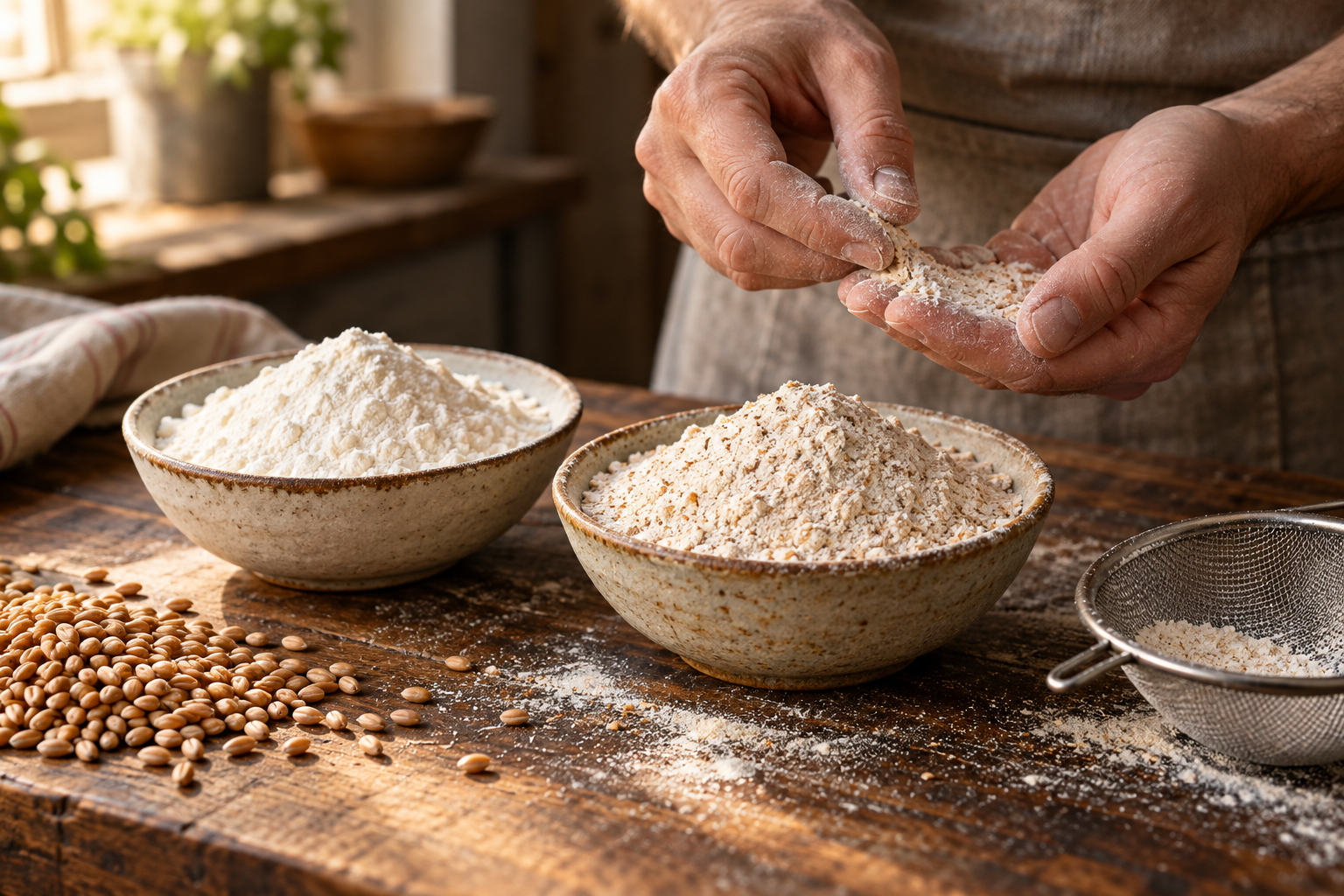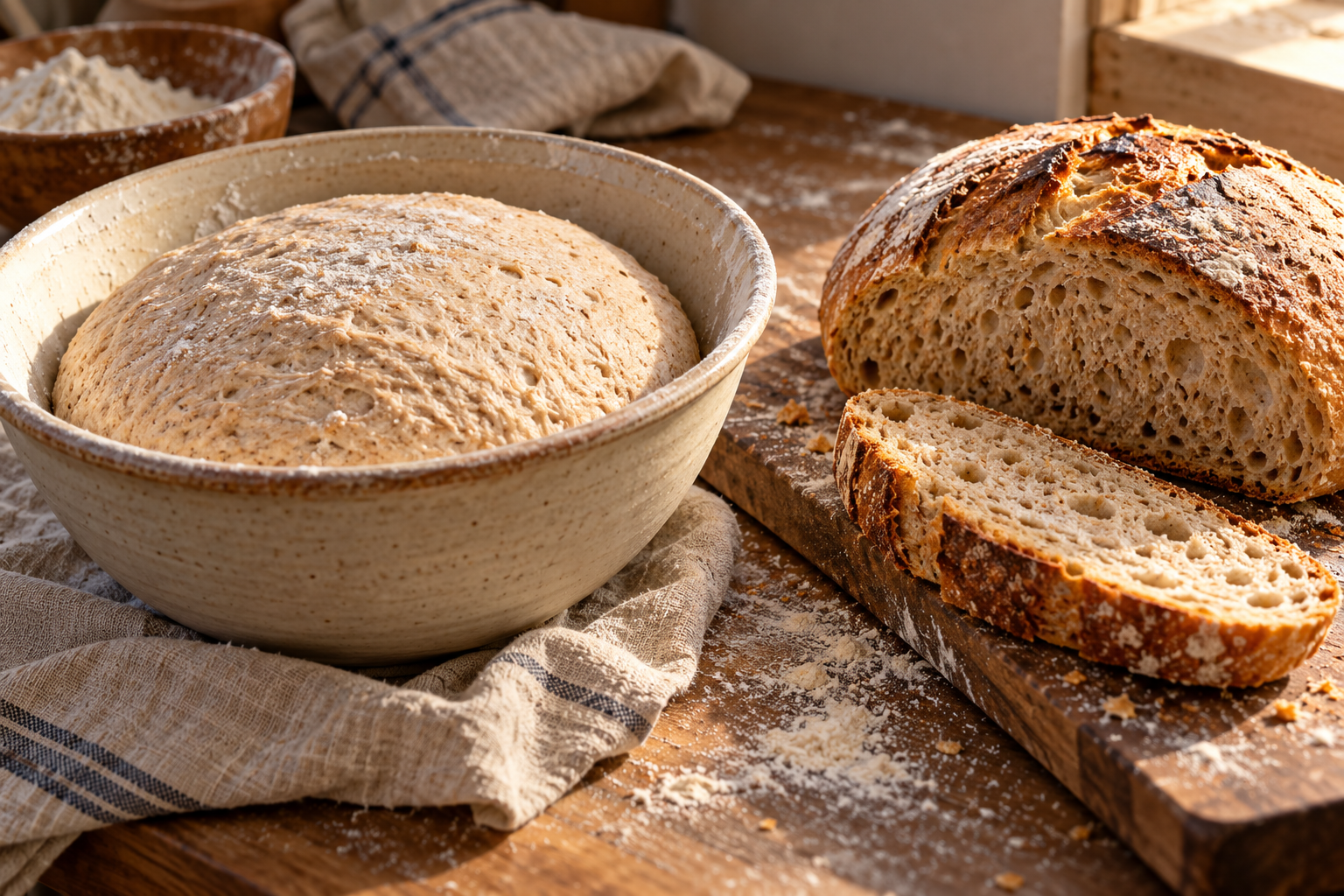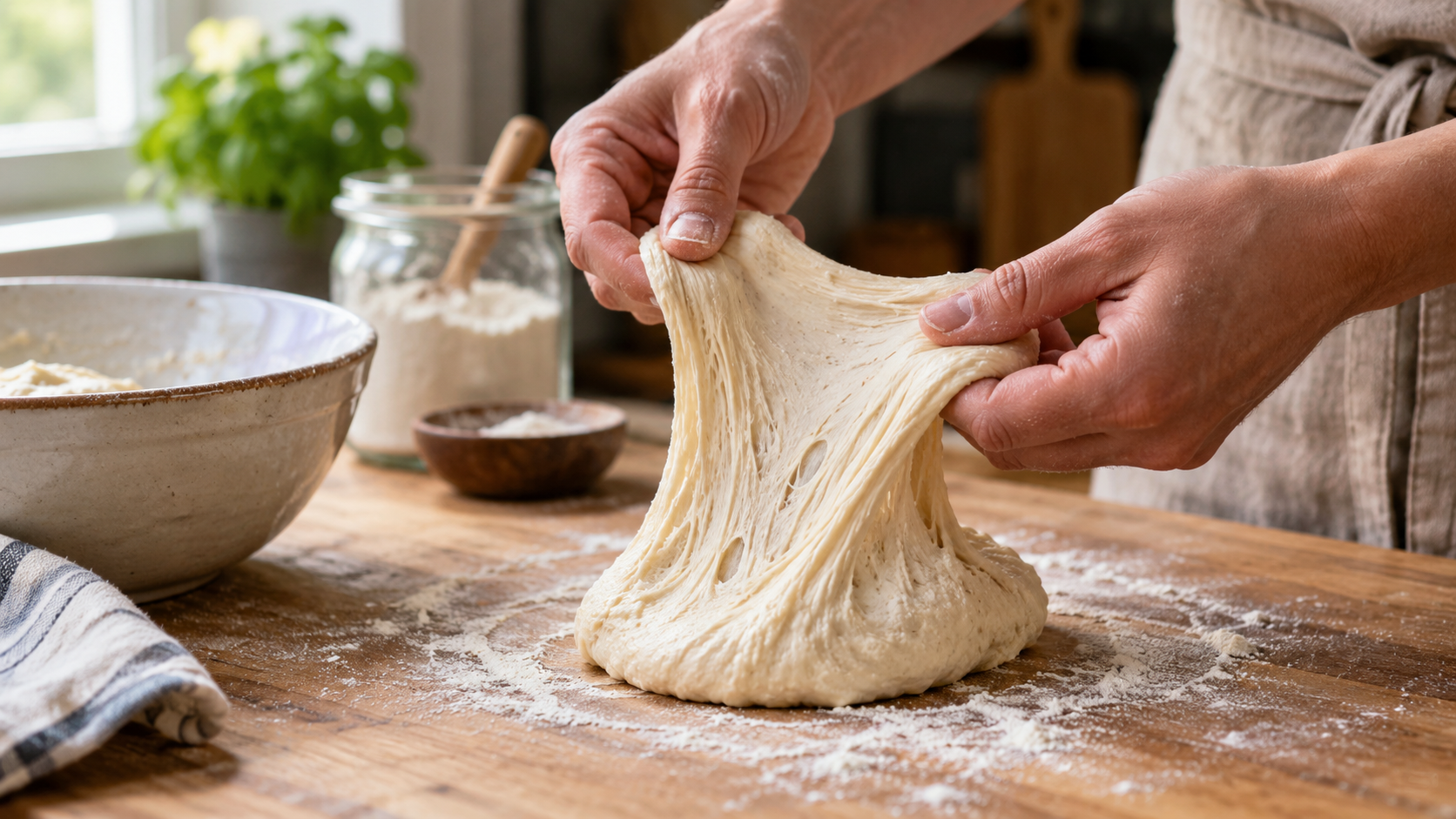
The worktop looked as though a small flour-based weather event had passed through Wellington. My hands were coated. The dough was coated. The sensible part of my brain had quietly left the room.
I had been trying to make a sticky dough feel obedient. Each time it clung to my fingers I added more flour. The dough became easier to handle, which I mistook for proof that the bread was improving. The loaf later supplied a rather persuasive counterargument.
This is the sort of mistake I find reassuring now. It was not mysterious. I had changed the mixture repeatedly without keeping track of the change. The notebook contained the recipe's amount of flour and none of the little additions I had made in self-defense.
Ask what the dough is doing
On the next attempt I paused before reaching for the bag. I cleaned the worktop, gave myself a little space and observed the dough. Was it simply wet on the surface? Was it developing a more elastic feel? Had I given it the rest the recipe described? Was I trying to force a dough intended to be soft into the behavior of one intended to be firm?
Those questions were more useful than declaring sticky to be a defect. Different bread formulas have different textures. My job was to understand the one I had chosen, not to make every recipe resemble the first dough I had ever managed successfully.
I wrote down the feel in unscientific but recognizable language: clings at first, stretches further after a pause, gathers more willingly when I slow down. The words helped me compare one bake with the next. I did not need the notebook to sound like a laboratory report; I needed to understand it on a sleepy Sunday.
I also learned to stop judging the entire process by one messy minute. A dough can feel difficult early in its development and different later. A recipe's instructions give the starting point; looking closely supplies information about my actual bowl, flour and room.
Keep the adjustment visible
Sometimes additional flour is appropriate. The problem was the invisible handful followed by another invisible handful. If I change the mixture, I record the change. That makes the result something I can learn from, rather than a loaf produced by a version of me who has refused to leave evidence.
The same applies to time. My home kitchen is often cool. I note the conditions and the dough's appearance instead of assuming an example written for another room will behave identically. When a recipe gives signs to look for, I treat those descriptions as useful companions to the clock.
A small repeatable recipe has taught me more than an ambitious sequence of unrelated bakes. I can notice a difference because I recognize the rest of the process. There is still room for curiosity; I simply avoid changing the flour, shaping, resting and baking arrangement simultaneously, then announcing that one of them was the answer.
Bread also receives a vote from the person who eats it the following morning. My partner is wonderfully uninterested in whether the dough looked impressive. They want a slice that makes good toast. This has spared us both some elaborate arguments about aesthetics.
I still dust a surface when the chosen method calls for it. I still make mistakes. The worktop is not always a monument to restraint. But before adding flour now, I try to name the problem I am solving.
A dough does not owe me the sensation of perfect control. I owe the next loaf a record of what I actually did.

A thought worth keeping?